
Genetic Testing for Breast Cancer: What a Genetic Counselor Wants You to Know
- Jennifer Thompson, MS, CGC

- Apr 15
- 7 min read

If you’ve ever wondered whether breast cancer runs in your family—or whether genetic testing is something you should consider—you’re not alone.
Breast cancer genetic testing can provide personalized insight into your cancer risk. But knowing what it is, whether it applies to you, and how to get started isn’t always straightforward.
This guide will walk you through what genetic testing is, what it can (and can’t) tell you, and how to decide whether it’s right for you.
Breast Cancer Genetic Testing: What It Is and How It Works

Breast cancer genetic testing looks for inherited changes (mutations) in specific genes that are linked to a higher risk of cancer. Approximately 10% of individuals with breast cancer have a gene mutation.
These are genetic differences you’re born with—and that can be passed down through families.
In simple terms:
It’s a test that looks at your DNA
It focuses on genes linked to cancer risk
It helps estimate your lifetime risk of breast cancer—not diagnose it
Testing is typically done using a saliva or blood sample, and results are reviewed with a healthcare provider or genetic counselor.
What Is BRCA Genetic Testing and Why Is It Important for Breast Cancer Risk?
BRCA genetic testing looks specifically at the BRCA1 and BRCA2 genes.
When working normally, these genes help protect against cancer. But when someone has a mutation, that protection function isn’t working correctly—leading to an increased risk of certain cancers.
Mutations in BRCA1 and BRCA2 are associated with higher risks of:
Breast cancer (in females and males)
Ovarian cancer
Prostate cancer
Pancreatic cancer
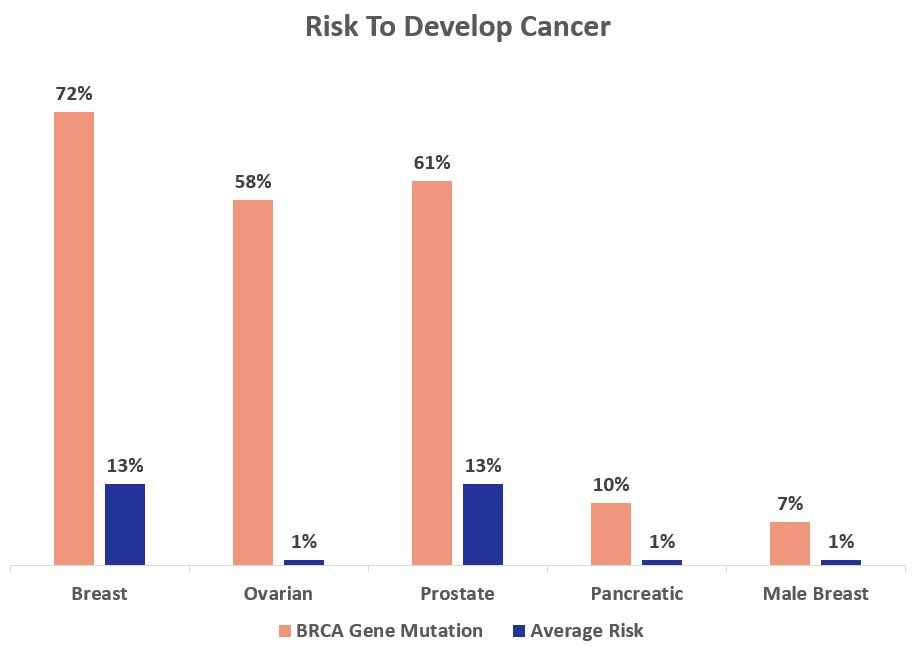
Females with a BRCA1/2 gene mutation have up to a 72% chance to get breast cancer in their lifetime – compared to just 13% for most females.
BRCA1 and BRCA2 are the most well-known genes related to hereditary breast cancer—but they’re only part of the picture.
Beyond BRCA: Other Genes Linked to Breast Cancer Risk
Today, most breast cancer genetic testing looks at multiple genes—not just BRCA1 and BRCA2.

Other important genes include:
PALB2
CHEK2
ATM
PTEN, TP53, and more
Each of these genes is associated with different levels of breast cancer risk—and in some cases, risks for other types of cancer. These differences may lead to more personalized screening or prevention recommendations.
What this means for you: A more comprehensive approach can provide a clearer, more complete understanding of your risk.
Understanding Your Breast Cancer Genetic Test Results: What They Mean and What to Expect
When you have genetic testing for breast cancer, there are three possible types of results.
1. Positive
A gene mutation was found that increases the risk for certain cancers.
What this means:
May increase your lifetime risk for breast and other cancers
May lead to earlier or more frequent screening
May have implications for family members
2. Negative
No gene mutations were found in the genes that were tested.
What this means:
Does not always mean your risk is average
Your personal and family history still matter
Screening recommendations may still be adjusted
3. Variant of Uncertain Significance (VUS)
A genetic change was found, but we don’t yet know if it affects cancer risk.
What this means:
It should not guide medical decisions
Most VUS results are eventually reclassified as negative
Your care should be based on your personal and family history.
What Genetic Testing Can—and Can’t Tell You
Genetic testing can help you:
Understand if you have an inherited cancer risk
Estimate your lifetime risk for certain cancers
Identify risks that may affect your family
But it can’t:
Predict whether you will definitely develop cancer
Tell you exactly when cancer might occur
Genetic testing provides clarity about risk—not certainty.
How Genetic Testing Can Impact Your Health Decisions
For many people, genetic testing is not just about information—it can help guide next steps.
Depending on your results, options may include:
Starting breast cancer screening earlier
Adding breast MRI to routine screening (along with mammograms)
Considering preventive medications
In some cases, discussing preventive surgery
These recommendations are often guided by organizations like the National Comprehensive Cancer Network, which provide evidence-based care guidelines.
These insights can help you make more informed, personalized decisions about your health.
Who Should Consider Genetic Testing for Breast Cancer?
Genetic testing is available to anyone, but it’s not always medically necessary.
Certain personal or family history patterns may make testing especially important.
You may consider genetic testing for breast cancer risk if you or someone in your family has:
Breast cancer diagnosed under age 50
Ovarian cancer (at any age)
Multiple relatives with breast and/or prostate cancer
Pancreatic cancer
Male breast cancer
Ashkenazi Jewish ancestry
A known genetic mutation in the family
Even if you don’t meet these criteria, some people choose to pursue genetic testing as part of a more proactive approach to their health.
A genetic counselor can help you understand what’s right for you.
How to Get Genetic Testing for Breast Cancer
Genetic testing can be ordered through a healthcare provider or a genetic counselor. You may also have seen at-home DNA tests, but these are not designed to guide medical care.
At HealthyGene, you’ll work with a board-certified genetic counselor who guides you through each step – so you can make informed decisions and understand your results in the context of your personal and family history.
Here’s what that looks like:
1. Meet with a genetic counselor
Review your personal and family health history
Discuss whether testing is medically recommended
Learn what testing can (and can’t) tell you
Understand what genes are included and whether insurance may cover the cost
This step helps you decide whether testing is right for you.
2. Complete the test
Testing is usually done with a simple saliva sample (or sometimes a blood draw).
3. Review your results with a genetic counselor and make a plan
Go over what your results mean for you and your family
Discuss personalized recommendations for cancer screening and prevention
Your genetic counselor helps put your results into context—so you leave with a clear understanding of what (if anything) to do next.
Why Genetic Counseling Matters Before and After Testing
Genetic testing is not just about getting results—it’s about understanding what those results mean for you and your family.
Working with a genetic counselor helps you:
Decide if testing is right for you
Choose the most relevant test
Avoid incomplete or unnecessary testing
Understand your results clearly
Make informed, confident decisions about next steps
It’s expert guidance that helps you understand your risk—and what it means for your next steps.
Frequently Asked Questions About Breast Cancer Genetic Testing
What’s the difference between medical-grade testing and at-home DNA tests?
Medical-grade genetic testing:
Ordered through a healthcare provider or genetic counselor
Performed at an accredited clinical laboratory
Includes clinically relevant genes
Used to guide medical decisions
At-home DNA tests (or direct-to-consumer tests):
Have a high false positive rate (i.e., they tell you that you have a gene mutation when you don’t)
Often analyze a limited number of variants
May not include all relevant genes
Are not designed for medical decision-making
How much does genetic testing cost?
The cost of breast cancer genetic testing can vary depending on:
The type of test
Insurance coverage
Your personal and family history
Many tests are more affordable than people expect (typically $250–$350), and financial assistance programs are often available.
Is genetic testing covered by insurance?
In many cases, yes.
Insurance often covers BRCA genetic testing or multi-gene panel testing if you meet certain criteria.
A genetic counselor can help:
Determine if you meet criteria
Navigate insurance coverage
Review potential out-of-pocket costs
What is the testing process like?
The process is usually simple and non-invasive.
It typically involves:
Meeting with a genetic counselor
A saliva sample or blood draw
Results in a few weeks
Most of the process is focused on understanding your results—not collecting the sample.
What are some common misconceptions about breast cancer genetic testing?
“There’s only one person in my family with cancer, so I don’t need genetic testing.”
Not always true. In some cases, even a single cancer diagnosis in the family—such as a grandmother with ovarian cancer or a young diagnosis—may be enough to recommend genetic testing. The type of cancer and who it occurred in can be just as important as the number of relatives affected.
“Breast cancer risk only comes from my mom’s side of the family.”
Genetic mutations can be inherited from either your mother or your father. Your paternal family history is just as important as your maternal history.
“Men don’t need genetic testing for breast cancer risk.”
Many genes, including BRCA1 and BRCA2, have cancer risks for males too. Men can also carry and pass down genetic mutations, and have important implications for their children and other family members.
“If I’ve already had cancer, genetic testing isn’t helpful.”
Genetic testing can still provide important information about future cancer risks and may impact treatment or screening recommendations, as well as help family members.
“BRCA is the only gene that matters.”
BRCA1 and BRCA2 are important, but there are several other genes related to breast cancer risk that should often be included in testing.
“Genetic testing will tell me if I’m going to get cancer for sure.”
Genetic testing estimates risk. For example, if testing shows you have a 72% lifetime risk of getting breast cancer, there is still a 28% chance you won’t.
“If no mutation is found, I don’t have an increased risk.”
A negative result doesn’t always mean average risk. Your personal and family history still play an important role in assessing risk.
Not Sure If Genetic Testing Is Right for You?
Deciding whether to pursue genetic testing isn’t always straightforward.
The Know Your Risk Hereditary Cancer Quiz—created by a board-certified genetic counselor at HealthyGene—helps you understand whether your personal or family history may suggest an increased risk.
Takes just a few minutes
Provides personalized guidance
Helps you decide on next steps

Take the Next Step: Understand Your Risk with Confidence
If you’re thinking about genetic testing, there are two ways to get started.
Start with the Know Your Risk Quiz to get a quick, personalized assessment.
Or, if you’d prefer a more in-depth conversation, you can schedule a consultation with a board-certified genetic counselor through HealthyGene.
Whether you start with the quiz or a consultation, the goal is the same: helping you understand your risk and what to do next.


